
NeoNest, safety from the first breath.
A low-cost, locally manufacturable transport infant warmer for Ugandan health facilities and emergency service providers. Our patented design is a neonatal warmer made from a water jug, medical grade insulation, and other locally sourced materials, and shaped by the nurses, physicians and midwives who use it.
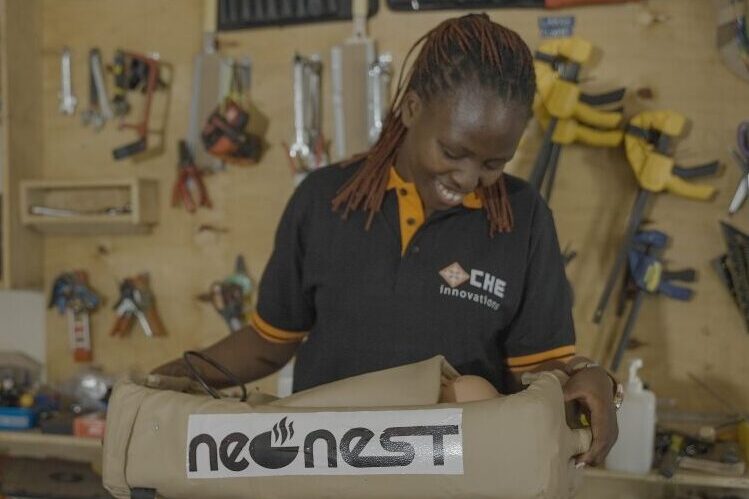
Every year, newborns across Uganda lose critical body heat in the fragile minutes between birth and safety whether on an ambulance to care, after a difficult delivery, or even in a ward without reliable warming. That drop in temperature, often overlooked, can decide whether a newborn lives or dies. NeoNest exists to give these newborns a chance at life no matter where they are born.
Built for the realities of newborn care in Uganda.
Every detail is designed around what clinicians, ambulance crews and facilities actually need.
01
Stable warmth, hour after hour
02
Safe transport, inside and between facilities
03
Locally manufacturable
04
Patented, human centered design
05
Cost effective, ward ready
A fraction of the cost of an imported infant warmer.
A single NeoNest unit costs roughly USD 300 to produce today. Compare that with imported neonatal warmers and incubators typically priced between USD 3,000 and USD 15,000. NeoNest is currently entering a clinical pilot with Ugandan health facilities, and is not yet sold on the open market. Facilities interested in the pilot or in future orders are welcome to apply for pilot placement below.
Production cost per unit
~USD 300
Imported alternatives
USD 3k–15k+
Current status
Clinical pilot
Availability
Pre-orders open
Only 5 pilot placements are available in this round, at pricing locked in until NDA and UNBS certification is complete.
What NeoNest means for your facility.
Adjust the numbers below to match your ward. Everything updates live, so you can see the case in your own terms, not ours.
Tell us about your facility
Rough numbers are fine. This is a planning estimate, not a quote.
Include referrals in, if your facility receives transfers.
Preterm, low-birth-weight or otherwise hypothermia-prone newborns. The 35% default reflects published admissions data from Mbarara Regional Referral Hospital's neonatal unit. Adjust to your own case mix.
A transport warmer is reused, not consumed. Most wards start with 2 to 5 units across shifts and transfer points.
What this means for you
Live estimate, recalculated as you adjust the panel.
630
newborns a year on your ward who may need warming support
- NeoNest units needed
- 3
- NeoNest total cost (~$300/unit)
- $900
- Same coverage, imported equivalent
- $18,000
- Capital avoided by choosing NeoNest
- $17,100
Assumptions: NeoNest priced at about USD 300 per unit at current pilot production and support cost. Newborns needing warming support is estimated as deliveries multiplied by the share you set above. This tool estimates capital cost avoided versus buying equivalent imported equipment. It does not estimate clinical outcomes, which depend on your case mix, staffing and existing protocols. Source for the 35% default: Turyasiima et al., neonatal admissions at Mbarara Regional Referral Hospital.
What early pilot facilities gain.
Hospitals that join the pilot early aren't just adopting equipment. They're positioning themselves in a few ways that matter to boards, donors and the communities they serve.
First-mover recognition
Early pilot hospitals are named as founding partners in a Ugandan-invented, patented medical device. A distinct story for annual reports, donor updates and local press, ahead of national rollout.
A seat in the data
Pilot outcomes are published as certification milestones are reached. Participating facilities are acknowledged in that record, a citable contribution to newborn-care research in Uganda.
Purpose-built beats improvised
Hot water bottles and ad hoc heating carry their own risks: burns, inconsistent temperature, no audit trail. A device bench-tested to IEC 60601 thermal-safety principles is easier to defend in an incident review.
Locked-in pricing, no regret
Pilot facilities get a preferential preorder price ahead of general release. If national demand pushes pricing up later, early partners are already covered.
Built with clinicians like yours
NeoNest was shaped by Ugandan NICU nurses, OBGYNs and ambulance workers, not adapted from a device built for a different health system. Staff tend to trust what their peers helped design.
No import dependency
Every part is sourced in Uganda. A broken clip or worn lining is a local repair, not a six-week wait on a customs shipment. Less downtime for the unit, less risk of it sitting unused.
Where we stand today, honestly.
NeoNest is a patented device currently in clinical pilot with Ugandan health facilities, conducted under research ethics approval and with clinical oversight from partner hospitals. It is not yet certified for open-market sale.
Our design and bench testing follow the thermal-safety principles of the IEC 60601 family of standards for infant warming devices, and we are working towards National Drug Authority (NDA) medical device registration and UNBS certification in Uganda. We will publish pilot outcomes and certification milestones as they are completed, and we are happy to share our current testing documentation with any facility that asks.
Built and validated with Ugandan clinicians.
NeoNest was developed with clinicians from Kawempe National Referral Hospital, and its feasibility and acceptability have been validated across five health facilities in Mbarara district.
Three steps. No surprises.
Step 1
Contact us
Send a quote request. We reply within a business day with next steps and indicative pricing.
Step 2
Facility needs assessment
A short call or visit to understand caseload, transport patterns, and how NeoNest fits your ward.
Step 3
Delivery & training
We deliver units, train your team on the ward, and stay on-call for spares and support.
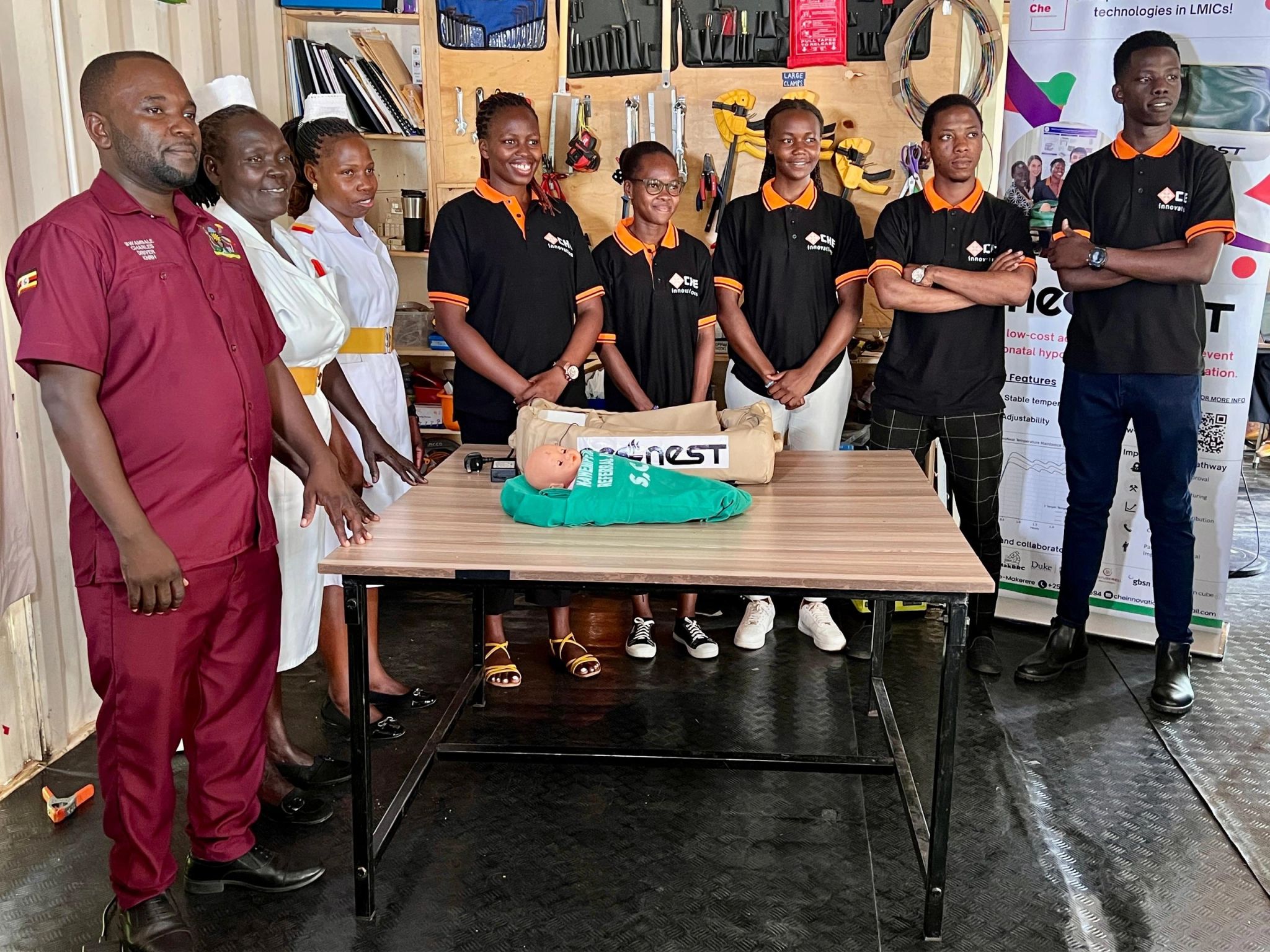
Simple where simple works. Serious where it must be.
- Use caseTransport warming for at-risk newborns during transfer between facilities.
- MaterialsLocally sourced, replaceable and repairable.
- Design partnerUgandan nurses, midwives, OBGYNs, ambulance workers.
- StatusPatented · Piloting with Ugandan health facilities.
What institutional buyers usually ask.
Tell us about your facility or programme.
Tell us about your facility and we'll follow up about a subsidised pilot placement.
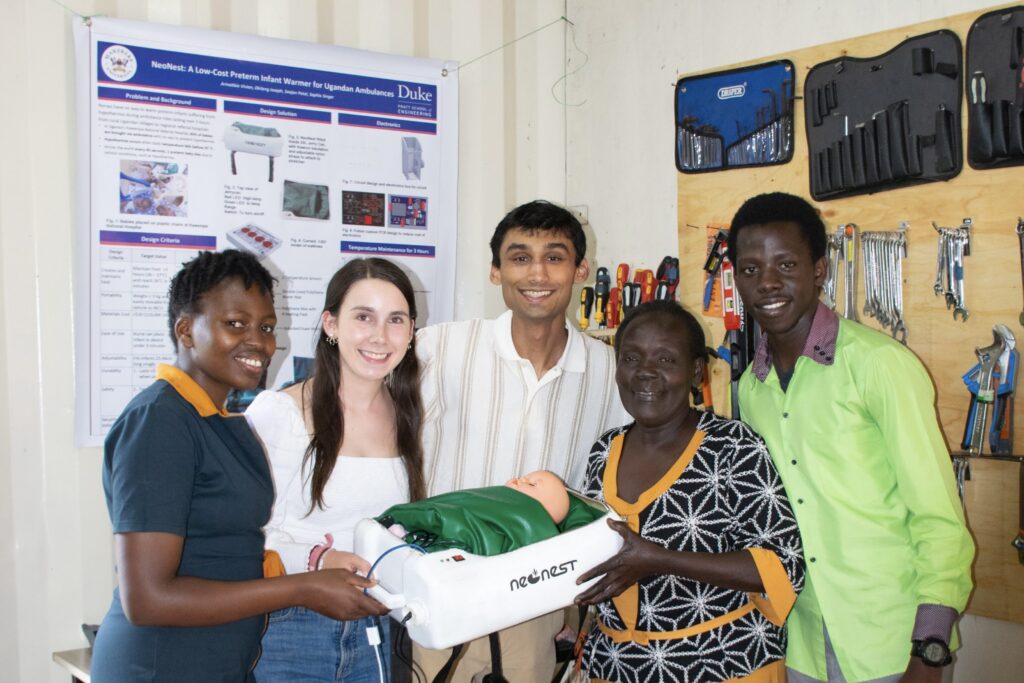
Prefer to try before you commit? Ask us about our clinical pilot placement — limited units available with a locked-in preorder price for participating facilities.